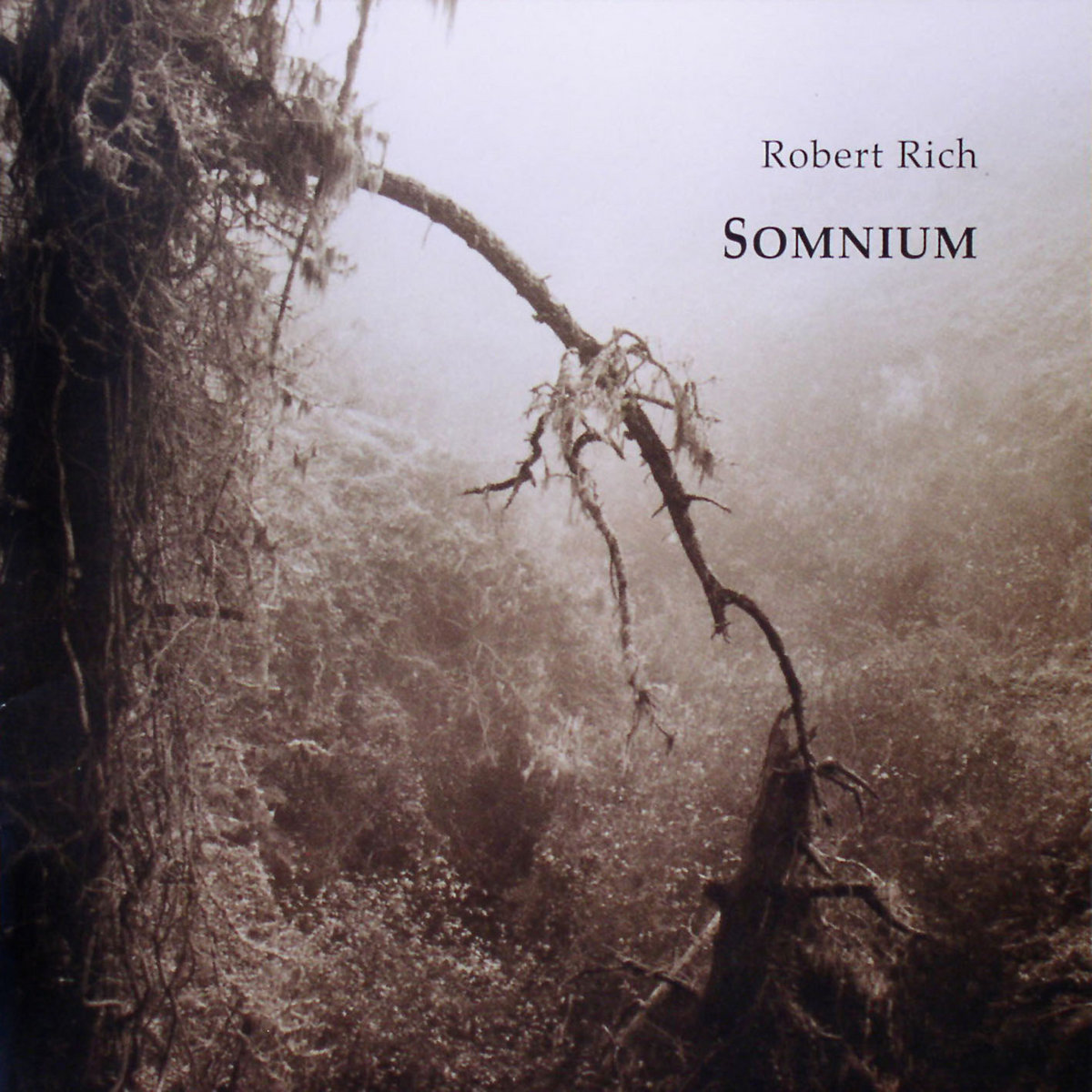
Somnium
February 1, 2001
Ambient / Electronic
At its time, one of the longest continuous musical composition ever released on any format, Somnium represents an ambient music landmark. In the 1990s, Robert Rich meticulously crafted a fresh studio interpretation of his notorious all-night Sleep Concerts, incorporating newly recorded electro-acoustic, electronic and environmental textures, with elements created for the original live events. Somnium guides the listener through an ever-changing dreamscape, with levels of subtle detail that reward both active attention and background listening. Deep and sonorous, mysterious and diffuse, liquid and hypnogogic. Somnium first came out on DVD format, but now that we have higher internet speeds, it becomes more feasible to allow people to purchase the full 7 hour as a download. Be aware that some sites offer a 74 minute CD length "excerpted" download due to older restrictions in distribution. The download offered here is the best sounding commercially available version of the entire piece. ============ Listening Tips: You can listen to Somnium at any hour, at any volume, but it works best quietly at night. You can set the best listening levels by adjusting the first 10 minutes so that it plays at a soft, comfortable volume for falling asleep. The environmental sounds during these opening minutes should be nearly inaudible. The music will gradually slow down and become quieter during the first hour, so that when you are sleeping, it should be soft enough that it hovers just at the edge of awareness. You can create the optimum listening environment with mutiple speakers arranged in a circle around the listening space. Although Somnium is a stereo recording, you can use the effects settings in a 5.1-channel home theatre amplifier to create the illusion of a complete environment. A four speaker stereo arrangement can also succeed in evoking this environmental effect. You can listen to Somnium in your sleep with a small pair of headphones, although these can become uncomfortable if you try to sleep on your side. If you choose to use headphones, be sure to keep the volume extremely low. Somnium and the Sleep Concert by Robert Rich The term “Sleep Concert” can be a bit misleading, as it implies that this music is intended to help you sleep deeply. On the contrary, when you play Somnium at night, you may find that you sleep less deeply, and wake up more often. The idea is to let the music incorporate itself into your perceptual framework during the night, to create a sonic surround, an environment for unique states of consciousness. The music is aimed at the nebulous territory that exists in your mind when you are hovering between awake and asleep, when you are still aware of your environment, yet detached, when your half-sleeping mind wanders into the realm of hypnogogic images and dreamlike non-linearity. You might find that this music can act as a trigger for these flowing thoughts, and the activation of the environment around you can help you to skate around the edges of sleep, with one foot in the dream world and one foot in the room where you are sleeping. The experience of listening to Somnium in your home will differ from the experience of audience members during the Sleep Concerts that inspired this music. In the concert environment, an additional state of heightened arousal can occur from social factors, whereas the environment of the home is more relaxed. At home you will have more choices about the way you listen to this music, so the music must also conform to these different possibilities. Certain things happen when many people sleep in a room together. In general, people sleep less deeply. One of the more mundane reasons for this is snoring. An estimated 10% of the population snores, which means that in a room with 50-100 people, some will snore. Since the music is generally very quiet, snoring can become invasive (and sometimes it’s quite funny.) Besides snoring, other interruptions will doubtless invade the Sleep Concert ambience. Among these may be traffic sounds, car alarms, sirens, or people walking around in the room when they get up to use the bathroom. Audience members may also notice my presence in the room as I work behind the mixer. The simple noises of other people can keep listeners in a lighter sleep. Interestingly, people become more physiologically activated merely by being in the proximity of other people. Perhaps this arousal is a purely chemical phenomenon. This is one of the interesting features that distinguish a live Sleep Concert from listening to Somnium at home. In the act of bringing a group of people together in the same room, we create an energized environment, which can contribute to the intensity of personal experiences. But for these factors to contribute to an interesting aesthetic experience, listeners must combine this activation with an increase in attention to internal states of mind. The music helps to intensify this internal focus. You can use Somnium at home in the same way. The musical environment of Somnium can act like a lens to sharpen mental images, a stimulus to help you generate internal realities. Some of the sounds are abstract, blurry, hard to separate from the background. Other sounds evoke natural environments, open spaces, insects and animal calls, wind or rain. The music can replace the acoustics of a room with a shifting virtual soundscape. To get the most out of Somnium, I recommend that you focus on several aspects of the sleeping experience. The most interesting experiences will occur in the transitions between sleeping and waking, and later when you are dreaming. Stage 1, non-REM sleep is the transitional stage of sleep, when you are still partly conscious of your environment. This distinguishes it from Rapid Eye Movement sleep (REM), when you have the most coherent dreams. During the transitions into Stage 1 sleep, you might have dreamlike thoughts and visions called hypnogogic images. Hypnogogic images are often less organized than true dreams, and often come blended with a semi-awareness of your environment. If you pass from this stage into a deeper sleep, you will not remember these images and thoughts. But if you can linger at the edge, slipping in and out of stage 1 sleep, you can ride along the edge of your own awareness. You can use the music as a focal point to hold yourself right at the brink of sleep, to help you maintain this hypnogogic state like a surfer uses gravity to stay on the leading edge of a wave. During these hypnogogic experiences, you might find that the sonic environment triggers dreamlike hallucinations, evoking fragile new mental landscapes. You might also remember more dreams while sleeping with Somnium, and they might be more vivid and intense. The reasons for this again relate to the activated environment. In order to remember a dream, you must wake up from it. The more you pay attention upon awakening, the more you will remember and the more vivid the memories will be. One of the more interesting dream experiences you might encounter is lucid dreaming – when you become aware that you are dreaming while still in the dream. Once you become aware that you are dreaming, you can affect the action within your dream, letting you explore the dream world actively rather than as a passive observer. Lucid dreaming becomes possible when you pay attention to the signs that you are dreaming, when you attend to your conscious processes. You may find that the activating nature of the Somnium environment can help you to pay closer attention to your mental states, and may even help you have a lucid dream. For some people, more intense dreams can become unpleasant, due in part to negative expectations and mental habit. Self-awareness, and lucid dreaming in particular, can help overcome some of these habitual reactions. When you dream, your mind is trying to interpret current physiological and environmental conditions, and these interpretations can become incorporated into dream content. If your body starts to generate more energy or tension, the brain can interpret this arousal as fear, and the night’s dreams might develop some dark overtones. However, the brain can also interpret arousal as mystical ecstasy, joy or sexual energy. All of these feelings are closely related in the body, and they relate closely to past experiences, expectations and environmental cues. The music on Somnium does not intentionally evoke any specific images, light or dark, but rather hangs in an indistinct place which you can interpret in many ways, like the ink-blots of a Rorschach test. The dream journey resembles a shaman’s journey, in that shamans know that they carry with them their own expectations when they enter their spirit world. Likewise, your past and your preconceptions will influence your dreams, along with your current environment. Throughout Somnium, the music gets quite deep, it explores the shadows. The music is also quite gentle. If you open yourself up to the possibility of intense experience, you can explore your mental states with an open mind. Even the shadows contain useful information. The more you pay attention, the more you might find.
Tracks
Listen On
Share
More by Robert Rich
Flood Expeditions: Farmington CT, 15 May 2018
Ambient / Electronic
Flood Expeditions: The Gatherings, 19 May 2018
Ambient / Electronic
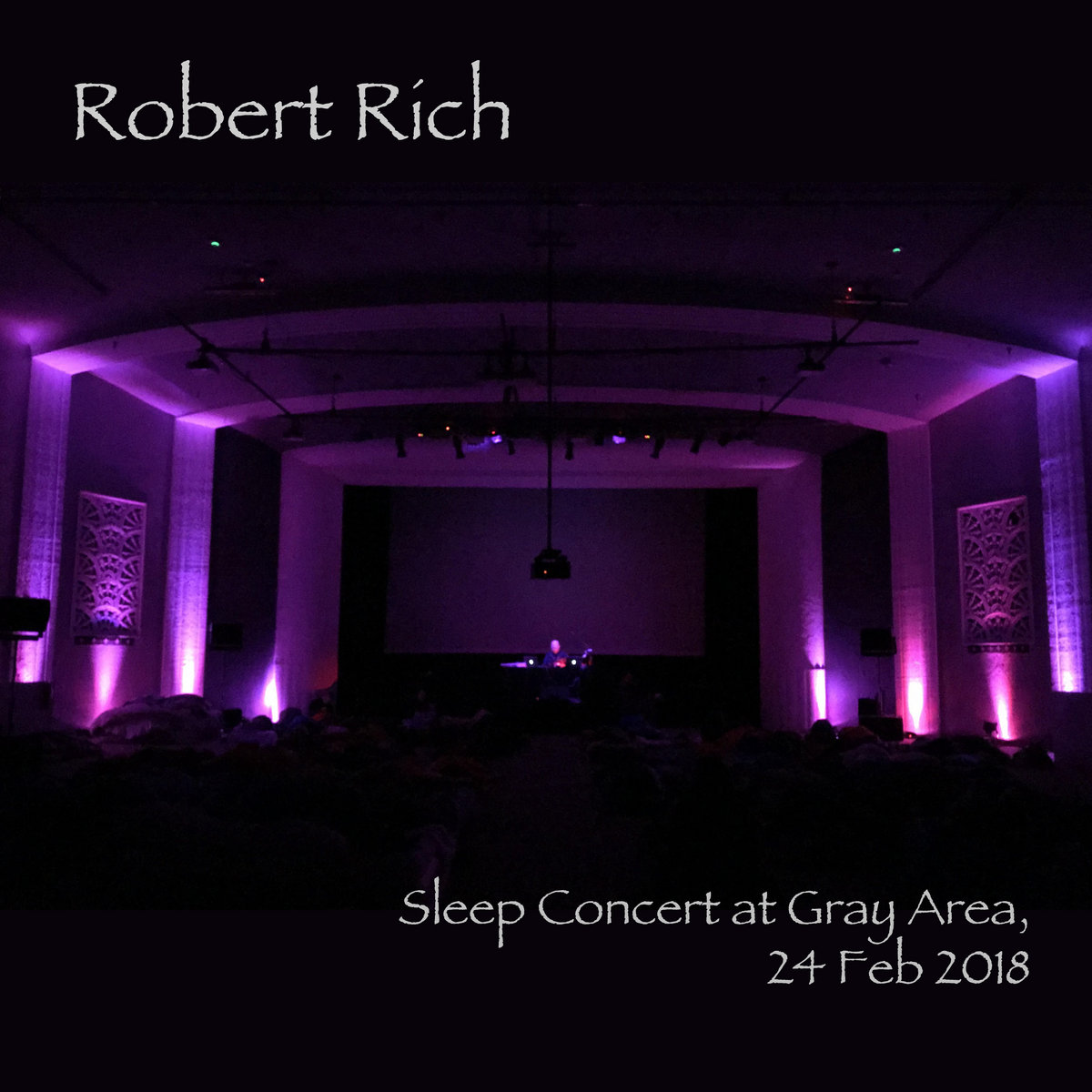
Sleep Concert at Gray Area, 24 Feb 2018
Ambient / Electronic
The Biode
Ambient / Electronic

Live At The Gatherings 2015
Ambient / Electronic
Lift a Feather to the Flood
Ambient / Electronic
Vestiges
Ambient / Electronic
Vestiges (24 bit 96 kHz)
Ambient / Electronic
Foothills: Robert Rich Live on KFJC, 28 May 2014
Ambient / Electronic
What We Left Behind
Ambient / Electronic
What We Left Behind - 24 bit 96 kHz
Ambient / Electronic
Filaments - 24 bit 96 kHz
Ambient / Electronic
Filaments
Ambient / Electronic

Perpetual
Ambient / Electronic
Premonitions
Ambient / Electronic
A Scattering Time
Ambient / Electronic / Indie Rock / Post-Rock
Frozen Day
Ambient / Electronic
Trances & Drones
Ambient / Electronic

Sunyata & Inner Landscapes
Ambient / Electronic

Nest
Ambient / Electronic

Nest - 24 bit 96 kHz
Ambient / Electronic
Medicine Box
Ambient / Electronic
Medicine Box - 24 bit 96 kHz
Ambient / Electronic
Morphology (Live at One Thousand Pulses, May 15, 2010)
Ambient / Electronic
Ylang
Ambient / Electronic
Ylang - 24 bit 96 kHz
Ambient / Electronic

Mycosphere: Live on KFJC, May 31 2008
Ambient / Electronic

Lumin: Live at Camerawork, March 6 2008
Ambient / Electronic

Live at Cowell Theater, San Francisco, May 12 2002
Ambient / Electronic
Alien Zoology: Live at Morrison Planetarium, San Francisco, December 9 2001
Ambient / Electronic

Shamballa: Live in Costa Mesa CA, May 20 2000
Ambient / Electronic

Due Acque: Live in Umbria Italy, April 1 2000
Ambient / Electronic

Ici et Maintenant: Live in Paris, May 12 1989
Ambient / Electronic

Zerkalo
Ambient / Electronic
Eleven Questions
Ambient / Electronic
Music from Atlas Dei
Ambient / Electronic
Illumination
Ambient / Electronic
Illumination - 24 bit 96 kHz
Ambient / Electronic
Electric Ladder
Ambient / Electronic
Electric Ladder - 24 bit 96 kHz
Ambient / Electronic
Echo of Small Things
Ambient / Electronic
Echo of Small Things - 24 bit 96 kHz
Ambient / Electronic
Open Window
Ambient / Electronic
Open Window - 24 bit 96 kHz
Ambient / Electronic
Calling Down The Sky - 24 bit 96 kHz
Ambient / Electronic
Calling Down the Sky
Ambient / Electronic
Temple of the Invisible
Ambient / Electronic
Bestiary
Ambient / Electronic
Pivot
Ambient / Electronic